By Jenn Hoskinson | WSPTA Special Education Committee Co-Chair 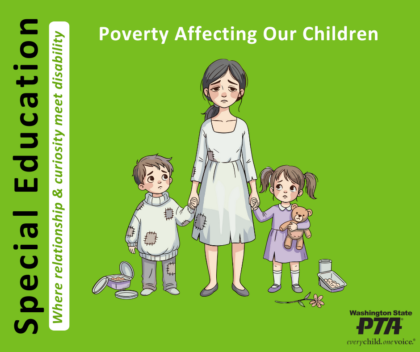
With Poverty Awareness Month upon us, one may question its impact on children in Washington state and nationwide. Does poverty contribute to problems with education and their access to care, besides the concerns with food and housing? These are tough questions that often have sad answers.
When a child faces poverty, they can’t focus on schoolwork because they’re hungry and focused on where their next meal is coming from or where they’re going to sleep that night. Homework becomes impossible, and then grades slip, which impacts their learning and performance at school. Others also argue that people in poverty don’t always get proper medical care due to transportation issues, financial strain, or adequate insurance. Children with disabilities who don’t receive proper medical care, therapies, and medication, if needed, tend to suffer more from their disability, which impacts more than just their school life.
So, how do we as a society help the poverty situation?
- First, donate! Donate to your local shelters (211), food banks (Feeding America), or other businesses that support local homelessness and low-income families.
- Second, write to your legislators, mayors, and other decision makers in your community. Ask them to fight for free school lunches for all students and to increase school funding so schools have the proper training, equipment, and supports to identify, assist, and support all students regardless of their gender, race, or socioeconomic standings!
- And last, volunteer at your local schools. Sometimes it goes a long way with a child who needs a friendly face to know that they’ll be ok and that people care for them.
Poverty affects us all in one way or another. Be that friendly face. Be the support that a child needs to get the education and life they deserve!